
In today’s interconnected world, our smartphones have become repositories of sensitive information, from personal communications to financial details. Protecting this data is paramount, and while device-level security measures like passcodes and biometric authentication offer a baseline of defense, they often fall short. App locking provides a crucial second layer of security, effectively “Fort Knoxing” individual apps and shielding your private data from prying eyes. This comprehensive guide explores the importance of app locking and provides a step-by-step walkthrough on how to implement this essential security feature for enhanced privacy on your device.
Fort Knox Your Phone with this guide that dives deep into the world of app lockers. Learn how these tools can bolster your privacy by adding an extra layer of security to sensitive applications like banking apps, social media platforms, and personal messaging services. Discover the various methods available for locking apps, ranging from built-in phone features to third-party apps, and choose the solution best suited to your needs and privacy preferences. We’ll cover best practices for creating strong PINs and passwords, managing multiple locked apps, and ensuring your data remains secure. Start your journey to enhanced privacy today.
Why Lock Your Apps?
In today’s interconnected world, our smartphones house a treasure trove of personal information. From banking details and private conversations to sensitive photos and work emails, the data on our devices is often invaluable and deeply private. Locking individual apps adds another layer of security, safeguarding your information from prying eyes and unauthorized access.
Consider the scenarios where app locking becomes crucial. Lending your phone to a friend to show a photo? A quick game on your device by a family member? Even misplaced or stolen phones become significantly less vulnerable with locked apps. Protecting your privacy isn’t about hiding something; it’s about controlling who has access to your digital life.
App locking offers a proactive approach to security, minimizing the risk of data breaches on a personal level. It gives you peace of mind knowing that even if your phone is momentarily out of your possession, your sensitive information remains protected. This granular control over your data is essential in an age where data breaches and privacy violations are increasingly common.
Different Methods to Lock Apps on Your Phone
Several methods exist to secure your apps, offering varying levels of protection and convenience. Choosing the right method depends on your device, operating system, and specific security needs.
Built-in OS features are often the easiest option. Many modern operating systems include native app locking functionalities. These can range from simple PIN codes to more advanced biometric authentication like fingerprint or facial recognition.
Third-party app lockers offer a broader range of features and customization. These apps often provide enhanced security measures, including intruder alerts, fake crash screens, and customizable lock themes.
Some launchers and custom ROMs also provide integrated app locking mechanisms. These can be convenient if you’re already using a custom interface, offering seamless integration with your existing setup.
Finally, certain individual apps offer in-app locking. This is useful for apps containing highly sensitive data and provides an extra layer of security even if your device is unlocked.
Using Built-in Phone Features for App Locking
Many modern smartphones offer integrated app locking features, eliminating the need for third-party apps. These built-in options often leverage the phone’s existing security measures, like fingerprint or facial recognition, for a seamless experience.
iOS devices provide app locking through Screen Time. By navigating to Content & Privacy Restrictions within Screen Time settings, users can set time limits for app usage. Leveraging the “Always Allowed” section, you can effectively lock any app not explicitly added to this list. This method uses the device’s passcode for unlocking.
Some Android devices feature built-in app locking functionalities within their security settings. The exact location and implementation can vary depending on the manufacturer and Android version. These features typically use your device’s PIN, pattern, or biometric lock for access.
While often simpler to use, built-in app lockers may offer fewer customization options compared to third-party alternatives. They usually lack advanced features like intruder selfies or fake crash screens.
Third-Party App Lockers: Features and Benefits
If built-in options aren’t sufficient, third-party app lockers offer a wider range of features and enhanced customization.
These apps often include multiple lock types beyond PINs and patterns. Some offer fingerprint or facial recognition for faster access. Intruder selfies are a popular feature, capturing photos of anyone attempting to unlock your apps with incorrect passwords.
Many third-party lockers provide enhanced privacy features. Some can hide app icons completely, making them invisible on your app drawer. Others offer fake crash screens, disguising the locked app as if it has malfunctioned.
Finally, these apps often include additional security measures like password vaults and data breach alerts, creating a more comprehensive privacy solution.
Protecting Sensitive Data with App Locking
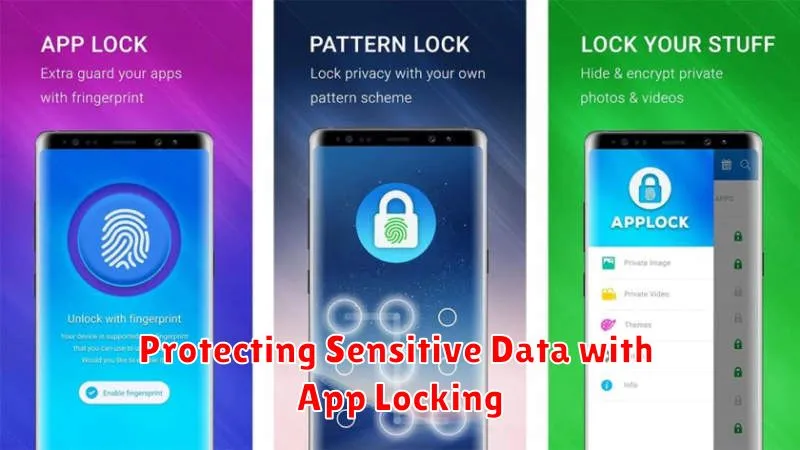
App locking acts as a crucial safeguard for sensitive data stored on your phone. Financial information, accessed through banking and investment apps, remains shielded from prying eyes with an additional layer of security. This prevents unauthorized access to account details, transaction histories, and personal financial data.
Personal communications, often containing private conversations and media, are similarly protected by app locking. Messaging apps, email clients, and social media platforms can be locked to prevent unauthorized viewing of your conversations and shared content.
Health information, frequently accessed through health tracking and medical apps, benefits from the enhanced privacy app locking offers. This safeguards personal medical records, medication details, and other sensitive health-related data from unauthorized access.
By utilizing app locking, you create a fortified barrier against data breaches, ensuring your sensitive information remains confidential and secure, even if your device is lost or stolen. This proactive measure significantly minimizes the risk of identity theft and unauthorized access to your personal information.
Customizing App Lock Settings: Timeouts, PINs, and More
Most app locking solutions offer a range of customization options to tailor the security to your specific needs. Understanding these settings is crucial for maximizing your privacy.
Timeout Settings: Control how long an app remains unlocked after you’ve accessed it. Options typically range from immediate re-locking to extended periods. Shorter timeouts provide enhanced security, particularly if you frequently step away from your device. Longer timeouts offer convenience, reducing the need for constant authentication.
Lock Types: PINs and patterns are common locking methods. Some apps also support fingerprint or biometric authentication. Consider the security level of each method. Complex PINs offer stronger protection than simple patterns. Biometrics provide speed and convenience but can be subject to certain vulnerabilities.
Per-App Customization: Many apps allow granular control, letting you set different timeout periods and lock types for individual applications. This allows you to apply stronger security measures to sensitive apps like banking or messaging while maintaining easier access to less critical ones.
Troubleshooting Common App Locking Issues
Occasionally, you might encounter issues with your app locking functionality. This section addresses some common problems and provides potential solutions.
App Lock Not Working After Update
Sometimes, a system or app update can interfere with app locking functionality. Reinstalling the app lock app often resolves this issue. Ensure you have the latest version of the app lock app installed from a reputable source.
Forgotten PIN/Pattern
Most app lock apps offer a recovery mechanism for forgotten PINs or patterns. Typically, this involves answering a security question or using a recovery email address. Refer to your app lock app’s documentation for specific instructions.
App Crashes After Locking
Certain app compatibility issues can cause apps to crash after being locked. Check for updates for both the app lock app and the affected app. If the problem persists, you might need to temporarily disable the lock for that specific app or contact the app developers for support.
Accessibility Conflicts
If you use accessibility services, they might conflict with the app lock’s functionality. Review the settings of both the accessibility service and the app lock app to ensure they are not interfering with one another. Sometimes, adjusting permissions can resolve the conflict.
Best Practices for Secure App Locking
Employing app locks significantly enhances mobile security, but maximizing their effectiveness requires adherence to best practices. Strong, unique PINs or passwords are paramount. Avoid easily guessable sequences like “1234” or birthdates. Consider utilizing a password manager to generate and store complex access codes.
Regularly update your chosen locking method. Just as with system passwords, periodic changes prevent potential vulnerabilities. This is especially important if you suspect a compromise.
Review app permissions carefully. Be mindful of the access granted to each app, particularly those you choose to lock. Excessive permissions can create security loopholes, even with a lock in place. Limit app permissions to only what is absolutely necessary for functionality.
Keep your locking software updated. Regular updates patch security flaws and introduce performance improvements, ensuring optimal protection.
The Future of App Locking: Biometrics and Beyond
The landscape of app locking is constantly evolving, driven by advancements in security technology and user demands for more robust privacy controls. Biometric authentication, already prevalent in device unlocking, is becoming increasingly integrated into app locking mechanisms. Fingerprint and facial recognition offer a convenient and secure alternative to traditional PINs and patterns.
Beyond biometrics, behavioral biometrics is emerging as a promising frontier. This technology analyzes unique user interaction patterns, such as typing speed and scrolling behavior, to verify identity. This adds another layer of security, making it even more difficult for unauthorized users to gain access.
Context-aware app locking is another exciting development. This utilizes factors like location and network connection to dynamically adjust app lock settings. For example, apps could automatically lock when connected to public Wi-Fi or when the device is in a specific location.
Integration with multi-factor authentication (MFA) is also gaining traction. Combining app locking with MFA adds an extra hurdle for unauthorized access, requiring multiple verification methods.
