
Counterfeit charging cables pose a significant risk to both your valuable devices and sensitive data. These seemingly harmless fake charging cables, often sold at enticing prices, can lead to a range of problems, from slow charging and device damage to data breaches and even fires. Learning to spot these fake chargers and opting for certified charging cables is crucial for protecting your investment and your personal information. This article will equip you with the knowledge to identify counterfeit charging cables and make informed purchasing decisions to safeguard your technology.
Protecting your devices and data starts with being aware of the dangers posed by fake charging cables. Using counterfeit chargers can lead to overheating, battery damage, and even complete device failure. Beyond the physical risks, fake cables can also compromise your data security, leaving you vulnerable to malware and data theft. By understanding the telltale signs of a counterfeit cable, you can avoid these risks and ensure the longevity and security of your electronic devices. Read on to discover how to differentiate between genuine and fake charging cables and protect yourself from potential harm.
Why Fake Charging Cables Are Dangerous
Counterfeit charging cables pose significant risks to both your devices and personal data. These cables are often manufactured with subpar materials and inadequate safety measures, leading to a range of potential hazards.
One major concern is fire hazard. Fake cables may overheat due to poor insulation and inferior wiring, potentially causing fires or burns. They often lack crucial safety features that genuine cables incorporate to prevent such incidents. This risk extends beyond the cable itself, potentially damaging your connected devices and surrounding property.
Device damage is another serious consequence. The inconsistent power delivery from a counterfeit cable can strain your device’s battery, shortening its lifespan or even causing permanent damage. These cables may also fail to provide sufficient power, leading to slow or erratic charging.
Beyond the immediate risks, counterfeit cables can compromise data security. Some fake cables have been found to contain malicious chips designed to steal sensitive data from connected devices. This could include personal information, login credentials, or even financial details.
Visual Cues to Identify Fake Cables
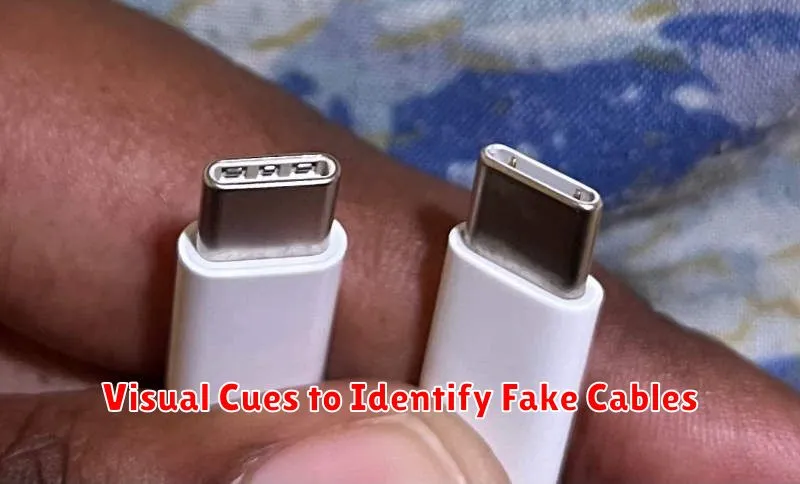
One of the easiest ways to spot a counterfeit charging cable is through careful visual inspection. Pay close attention to the physical appearance of the cable and its connectors. Look for inconsistencies in color, material, and finish.
USB Connector: A genuine connector will typically have a uniform and smooth finish. Counterfeit cables often have rough edges, gaps, or misaligned components. The USB logo itself might be poorly printed or missing entirely. Check the connector’s metal plating; fakes may use cheaper, less durable materials that tarnish or scratch easily.
Cable Material and Construction: Examine the cable’s material. Genuine cables often use higher quality, more flexible materials. Counterfeits might feel stiff, brittle, or unusually thin. Look at the text printed on the cable; it should be clear, sharp, and correctly spelled. Smudged, blurry, or misspelled text is a red flag.
Lightning Connector (for Apple devices): On Lightning connectors, check the contact points. Fakes may have unevenly spaced or poorly finished contacts. The plastic surrounding the metal should be smooth and consistent. A rough or uneven surface suggests a counterfeit.
Performance Indicators of Counterfeit Cables
Beyond visual inspection, the performance of a charging cable can reveal its authenticity. Slow charging speeds are a primary indicator. If your device charges significantly slower than usual with a new cable, it could be a counterfeit. This is often due to the cable’s inability to handle the required current.
Overheating is another serious red flag. Counterfeit cables often utilize subpar materials and construction, leading to excessive heat generation during charging. This can damage your device’s battery and even pose a fire hazard.
Intermittent charging, where the connection repeatedly cuts in and out, suggests a poorly constructed cable with loose internal wiring. This inconsistent power delivery can stress your device’s charging circuitry.
Finally, pay attention to data transfer speeds if the cable is also meant for data synchronization. Fake cables may transfer data much slower than genuine ones, or fail to transfer data altogether.
Testing and Verification Methods
While visual inspections offer initial clues, more rigorous testing methods can definitively identify counterfeit charging cables. One such method involves using a USB multimeter or power meter to measure the actual current and voltage output. Compare these readings to the cable’s specifications. Significant discrepancies indicate a potential counterfeit.
Another effective method is utilizing cable testers specifically designed to analyze USB cables. These devices assess data transfer speeds and charging capabilities, highlighting any deviations from expected performance levels.
Resistance testing, using a multimeter, can reveal internal inconsistencies within the cable. High resistance suggests subpar materials or construction, a common trait of counterfeit cables.
Finally, if you possess technical expertise, consider carefully disassembling a suspected fake cable. Examination of the internal components can reveal inferior wiring, inadequate shielding, or the absence of crucial safety features.
Checking Certifications and Packaging
Certification markings play a crucial role in identifying genuine charging cables. Look for markings such as CE, FCC, RoHS, and MFi (Made for iPhone/iPad/iPod). Counterfeit cables often have fake or missing certifications. Scrutinize these markings carefully; inconsistencies in font, size, or spacing can indicate a fake.
Packaging provides further clues. Genuine products typically come in high-quality packaging with clear printing and accurate product information. Look for inconsistencies such as blurry images, spelling errors, or low-quality materials. Check for proper seals and security features. Compare the packaging with images of genuine products online.
Manufacturer information should be clearly displayed on the packaging. Verify the manufacturer’s website and contact information to confirm the product’s authenticity. Be wary of vague or missing manufacturer details.
UPC or EAN barcodes can be scanned using a smartphone app to verify product authenticity. Discrepancies between the scanned information and the product itself can indicate a counterfeit.
Safe Disposal of Fake Charging Cables
Improperly discarding counterfeit charging cables can pose environmental hazards and potential safety risks. Don’t simply throw them in the trash. Follow these guidelines for safe and responsible disposal:
E-waste Recycling
The best way to dispose of fake cables is through e-waste recycling programs. Many municipalities offer designated collection points or events for electronic waste. These programs ensure proper handling and prevent harmful materials from entering landfills.
Retailer Take-Back Programs
Some electronics retailers have take-back programs for electronic accessories, including cables. Check with your local retailers to see if they accept old or counterfeit cables for recycling.
Hazardous Waste Collection
If your local area designates certain electronics as hazardous waste, follow their specific disposal guidelines. This may involve taking the cables to a designated hazardous waste collection center.
Cutting the Cable (as a Last Resort)
If no other options are available, you can cut the cable before discarding it in the regular trash. This discourages others from retrieving and potentially using a dangerous counterfeit cable. However, recycling is always the preferred method.
Recommended Places to Buy Genuine Cables
Sourcing genuine charging cables is crucial for device safety and optimal performance. Purchasing from authorized retailers or directly from the manufacturer is the most reliable way to ensure authenticity.
Manufacturer’s Online Store: Buying directly from the device manufacturer guarantees a genuine product. This is often the safest option, though potentially slightly more expensive.
Authorized Retailers: Many electronics stores and online marketplaces are authorized to sell specific brands. Look for official certifications or partnerships on their websites to verify their status.
Certified Resellers: Some reputable retailers specialize in certified pre-owned or refurbished electronics. These can offer a more affordable option, but ensure they have a clear certification process for verifying cable authenticity.
Protecting Yourself from Counterfeit Products
Protecting your devices and data starts with being a vigilant consumer. Thoroughly research brands and retailers before making a purchase, especially online. Look for established retailers with positive reviews and clear return policies.
Price can be a significant indicator. If a deal seems too good to be true, it probably is. Counterfeit cables are often priced significantly lower than genuine products to lure unsuspecting buyers. While a discounted price isn’t always a red flag, extreme price drops should raise suspicion.
Packaging also plays a key role. Examine the product packaging for inconsistencies. Look for blurry logos, misspellings, or low-quality printing. Genuine products typically have high-quality packaging with clear, crisp branding.
Verify certifications. Check for legitimate safety and quality certifications, such as CE, FCC, or MFi (Made for iPhone/iPad/iPod). Counterfeit cables often lack these certifications or display fake markings. Confirm the certification numbers on the manufacturer’s website when possible.
